
Storm damage roofing leads: how established roofers win hail season without storm chasing
How $1M+ roofing companies get storm damage leads after hail: the data on hail and roof claims, a 72-hour plan, honest ads and the rules to follow.
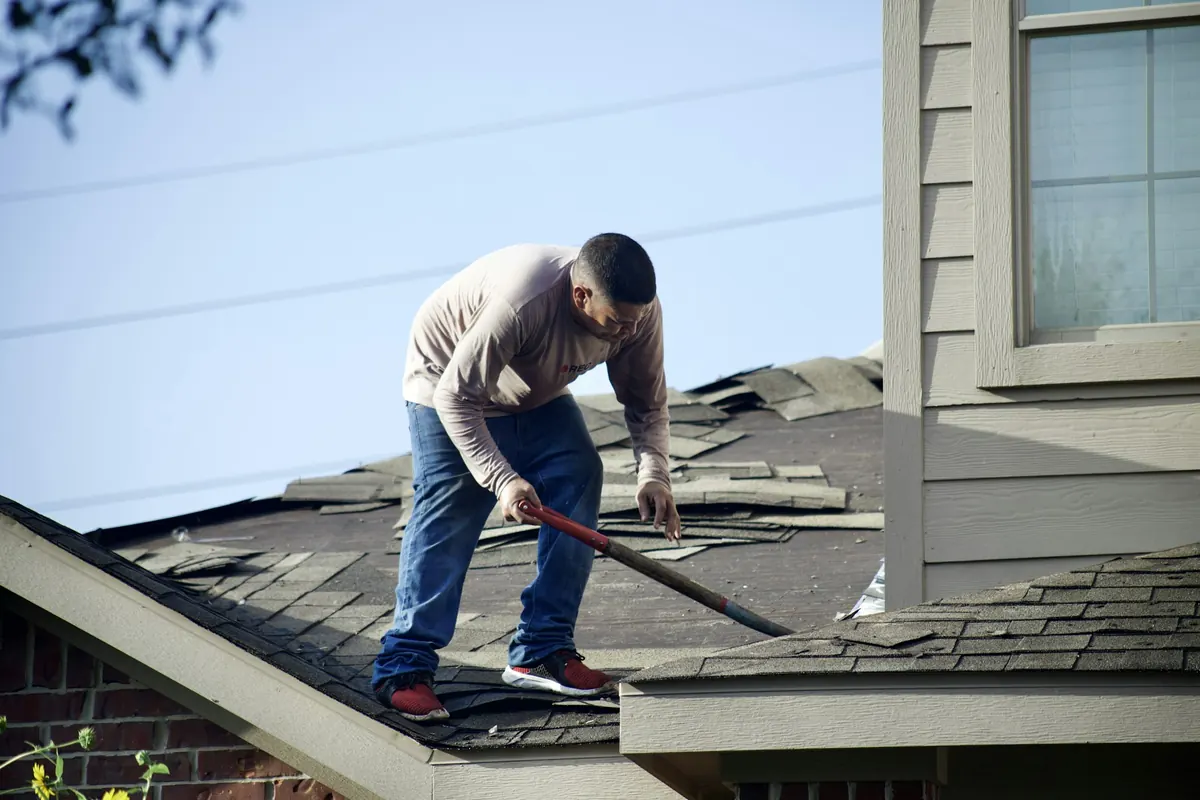
Roofer removing old asphalt shingles during a residential roof replacement. Illustrative photo: Zohair Mirza / Unsplash
Storm damage roofing leads come from three things done fast: knowing within a day which ZIP codes were hit, putting an honest inspection offer in front of homeowners in that exact area, and calling every lead in minutes, before an out-of-town crew knocks on the door. The established local roofer has the trust advantage. Most lose storm season on speed, not on ads.
How big is hail season, really?
Hail is the main weather risk to roofs across much of the country, and the numbers keep climbing:
| Metric | Figure | Source |
|---|---|---|
| Major hail events (1 inch or larger), 2025 | 5,432 | NOAA Storm Prediction Center, via the Insurance Information Institute |
| Major hail events, 2024 | 5,373 | NOAA Storm Prediction Center, via III |
| States with the most major hail events, 2025 | Texas (902), Kansas (375), Oklahoma (369), Nebraska (315), Missouri (253) | NOAA SPC, via III |
| Hail claims paid by State Farm, 2025 | Over $5.6 billion | State Farm, via III |
| Average residential roof replacement claim, 2025 | $17,631 (about 33% above the 2021 to 2024 average) | Verisk 2026 U.S. Roof Report |
| States where severe hail hit more than 20% of roofs, 2025 | 16 (up from 12 in 2024) | Verisk 2026 U.S. Roof Report |
Two things stand out for a roofing company owner. First, the average replacement claim is high and rising, so every storm job is worth real money. Second, Verisk found overall claim volume fell nearly 20% in 2025 while roof losses still rose. Even a “quiet” year has plenty of damaged roofs. The work is there; the question is who gets the inspection.
Why established roofers lose storm leads
After a storm, the homeowner is not comparing reviews for an hour. They are getting a knock on the door, three flyers and a few calls. The roofer who gets on the roof first usually gets the claim conversation. Where local companies lose:
- They find out late. They wait for the phones to ring instead of watching hail reports.
- They run their normal ads. The same “quality roofing since 1998” ad, across the whole metro, with no mention of the storm.
- They call back the next day. By then a canvasser already did the inspection.
- They don’t say why local matters. The homeowner can’t tell them apart from the crew with out-of-state plates.
A 72-hour storm plan
| When | What to do |
|---|---|
| Day 0 (storm night) | Check the NOAA Storm Prediction Center storm reports and your local news for hail size and location. List the ZIP codes hit with 1 inch hail or larger. |
| Day 1 | Launch a storm ad set targeting only those ZIP codes. Brief your office on a script for storm calls. Block inspection slots on the calendar for the next 7 days. |
| Day 1 to 3 | Call every new lead in under 5 minutes, 7 days a week. Book the inspection on the call, with a reminder by text the day before and the morning of. |
| Day 3 to 14 | Follow up every lead that didn’t book: day 2, day 4, day 7. Send photos and a written report after every inspection, even with no damage. |
| Day 30 | Cut the storm ad set. Measure cost per inspection and cost per signed roof against your normal campaigns. |
Speed matters more after a storm than any other time. Our speed to lead guide covers how to answer in under a minute without hiring three people.
What a good storm ad says
The best storm ads are specific and honest:
- Name the event: “Hail hit Plano on Tuesday night.”
- Make one offer: a free storm damage inspection with photos and a written report.
- Show you are local: your address, years in the area, local reviews, license number if your state requires one.
- Ask a few qualifying questions: owns the home, address, when the roof was last replaced, any visible damage or leaks.
What not to say: “free roof,” “we’ll pay your deductible,” or “insurance will cover it.” You can’t know that before the adjuster does, and in several states some of these offers are illegal. The Colorado Roofing Association states plainly that waiving insurance deductibles is illegal in Colorado. Check your state’s rules before you write the ad.
For creative ideas and form setup, see Facebook ads for roofers.
Storm leads vs retail leads
Storm leads and retail replacement leads behave differently. Plan for both.
| Storm damage leads | Retail replacement leads | |
|---|---|---|
| Timing | Spikes for 2 to 6 weeks after a storm | Steady all year, with seasonal swings |
| Urgency | High (leaks, insurance deadlines) | Medium (aging roof, selling the home) |
| Competition | Very high, including out-of-town crews | Normal local competition |
| Sales cycle | Depends on the adjuster and the claim | Depends on the homeowner and financing |
| What wins | Speed, local trust, clean documentation | Offer, follow-up and a clear estimate |
A company that only lives on storms has a feast and famine calendar. The roofing companies that grow steadily keep a retail replacement pipeline running all year and add storm campaigns on top when hail hits their area. If you need help with the retail side, start with how to get roofing leads.
How to measure a storm campaign
Don’t judge a storm campaign by cost per lead. Track the full chain:
- Leads from the storm ZIP codes.
- Inspections booked and inspections that actually happened (show rate).
- Claims filed and approved.
- Roofs signed and their average ticket.
Then compare cost per signed roof to what you can afford. The 3x rule calculator shows the maximum you can spend in marketing to win one roof and still keep a healthy margin.
Or let us book the inspections
Booked Contractor books roof estimate appointments for US roofing companies doing $1M+ a year. We run Meta ads on your own ad account, call every lead in under a minute, qualify the homeowner and put the inspection on your calendar. You pay a flat fee only when the homeowner sits down with your team, and we work with one roofing company per city. See how it works for roofing companies and pricing.
Related: How much do roofing leads cost · Lead response time for roofers · How roofers can increase show rate
Frequently asked questions
How soon after a hail storm should a roofer run ads?
Within 24 to 48 hours of a confirmed hail report in your service area. Homeowners start looking for an inspection in the first days, and out-of-town crews arrive fast. Target only the ZIP codes in the hail swath, not your whole market.
Is it legal for a roofer to pay or waive a homeowner's insurance deductible?
In several states it is not. The Colorado Roofing Association, for example, states that waiving insurance deductibles is illegal in Colorado. Rules vary by state, so check yours before you write any storm offer, and never advertise a free roof.
What offer works best for storm damage roofing ads?
A free storm damage inspection with photos and a written report. It is honest, easy to say yes to and gives the homeowner something useful even if there is no damage. Avoid promising that insurance will pay.
How is a local roofer different from a storm chaser for a homeowner?
A local roofer has a local address, reviews from the area, a license where required and will still be there to honor the warranty. Say those things in your ads and on your landing page. They are your biggest advantage after a storm.

David Sierra is the founder of Booked Contractor. In 10+ years of digital marketing and lead generation he has worked with 300+ clients, generated thousands of qualified sales calls and invested more than US$30M in ads.